This is by an American teacher. She'll keep reminding you of that but the lesson is dead on and easy. CELT and CELTA courses could easily drop this answer to What is stress? question on their candidates. Again video is much better than the printed page- it's what pronunciation teaching needs: Repeatable audio with visual cues to hang the ideas on. It isn't going to fix anyone's accent but it will help them notice a feature of pronunciation which is much more important than whether their th sounds like /θ/ or /ð/ or /t/ or /d/. Without further ado...
venerdì 6 febbraio 2015

mercoledì 4 febbraio 2015
A LinkedIn Post Goes Long
Dublin's not a great town for English Language Teachers to turn into ELT Writers. ELT Ireland is doing their best to change that. But still I think I can count on one hand the people I know who have been published here. Louise Guyett, John Byrne, Marianne Jordan and Tony Penston. Tony wrote A History of Ireland for Learners of English. I picked it up about 4 years ago. It could use a chapter about the 2008 Bank Bailout and the Right2Water Campaign now but aside from that it'll always be a useful little book for teachers here. I think publishing for a local audience is great. The history of local newspapers and the tandem delocalization decline of journalism is worth talking about. He's working on a new book now and was on LinkedIn asking this question:

My contribution went long and ranged as wide as a Texas longhorn. I should say I'm not proud of it but... Here it is in the full director's cut. I have inserted some comments as necessary. Enjoy!
Hi Tony, redesigning the chart is important. Establishing a national standard will be problematic because standards are local. I'd suggest the Wikipedia pages on English.
I meant this as the page. Wikipedia's still pretty a good jumping off point. Don't believe Peter Roach on everything. Not everyone writing there is a know-nothing poser pleb. I've paid for his book because it's worth it.
The notation differences are academic differences. Make your choice and justify it. The /y/ or /j/ is depends on who you think will be using your stuff. It's like adopting the metric system. I like Wikipedia and its adoption of IPA because it the Association's internationalism. It's more robust and inclusive even if it is less familiar to some teachers from the US. Pros and professors will see the benefit. I found this a very useful guide. http://www.amazon.com/Phonetic-Symbol-Guide-Geoffrey-Pullum/dp/0226685365
The ELT Ireland Bulletin will be addressing both sides of the issue in its inaugural issue. Peter Lahiff may be able to get you a rush copy. My take is that the RP chart is like a grammar book from the 1890s: retro-cool, but not useful universally and never intended for the to be helpful at 100+ .
I echo Judy: the RP chart (or any phonemic chart) is not the best pronunciation teaching tool because it focusses on phonemics instead of the features that improve intelligibility- the suprasegmentals. Totally agree on the syllable stress complaint, Judy. But Indians learned English before the Aussies so a little give and take is needed. Democratically, they are a major English accent. Americans can be downright imperious when it comes to Indians (old habits? PS I grew on land finagled in the Walking Purchase). We may have a set of accents we like, but a clearlier-than-thou attitude can be more grating than even my native Philadelphia-lite.
Here I'm talking about and then to Judy Thompson. She's on lots of forums and has strong opinions and shares them- and loads of good ideas and techniques. Heck she has a YouTube channel and a book. She's not a big fan of Indian English and seems to be crafting a scheme to be the head pronunciation teacher for the subcontinent. I remember her getting into a few scraps with Matt Bury, a good pronunciation guy and very helpful Flash user. But there's enough room for all, isn't there? (No, not if you are a Native American apparently.) Let's continue...

The RP of Gimson's '62 chart it is outdated. Peter Roach (of Peter Roach fame) also believes RP and phonemics in ELT have been damaged by the publisher preservationism of the old standard. See http://englishspeechservices.com/blog/the-year-1962/ for the story.
My previous post touched on this. I've been in touch with Peter. He's confirmed this.
(I'm going for record length here, guys...)
As I recall there's a 4000 character length limit. It's like Twitter supersized.
Regardless phonemic charts are still play an iconic part and should be redesigned and personalized so that teachers recognize their voices in them and see them as helpful learning aids not an imperial intrusion or something that got left over by a careless elocution teacher.
A great example of British bravery is Mark Hancock's month-old chart. Visually it is a helpful design improvement. The content shows some critical thought as well. It (FINALLY) includes a glottal stop. He said he thought long and hard about it- but keep calm and look around... the world is still spinning. He's absolutely right. Learners need it receptively and culturally ...and it wouldn't be sinning to use it productively. The glottal stop is as British as cricket. Here's a link: http://hancockmcdonald.com/blog/marks-chart He also wrote the popular English Pronunciation in Use.
I am a USAer teaching in the EU, Ireland mostly. My students here just want to be intelligible like John Levis said (University of Iowa, again) in that 2005 TESOL Quarterly. He's right, I think. They want to know why they don't understand things: how do we justify dropping and shortening words.
If you are reading this, a link to the pdf of this enormous and important paper is free and here. Do download. Academic papers really should be in the Creative Commons.
Sure a Japanese student will want to know how we can tell the difference between /l/ and /r/ and Italians need awareness raising about extra syllables at the end of consonant final words- and phonemics are a good way to focus attention.
It's teachers who need to know that phonemics is a foundation tool for THEM. Pronunciation can be improved to an intelligible level by someone who knows about how mouths work much more easily than someone who teaches like a tape recorder. A basic understanding of articulatory phonetics, perhaps the physical basis of phonetics and phonology and reason for the foundation of the IPA, is a missing component of teacher training. That's why the phonemic chart is important. That's why your work is too.
Well I've exceeded the character limit. I'll go into it more on my old pron blog.
No I didn't include a link to me.
Sir, I look forward to seeing your work. Can I pre-order?
And I absolutely will. And good luck to all you all you ELT writers.
- First it's great to see English Language Teachers on LinkedIn. It is your profession. If you don't treat it like one now, when will your 'employer'?
- Second, certain groups get a lot of traffic and the discussions are as good as any you would have at a conference or a (really good) staff room. You might find yourself talking with first time teachers of course or 25-year published ELT veterans. The pronunciation stuff is personal hobbsession and no one has really ever commented here so if I want a readership, I need to comment in the social media world. I have avoided it too long. Now this group ESL International has 38k+ members. In the 8 year lifetime of this blog I think there have been approximately 3 subscribers. One of them may now have stopped using technology in a bout of extreme neo-luddism.
- Third, if you ever want to start a debate on a ELT social media site, British English vs American English is a guaranteed rabble rouser. Maybe you can stay above the fray but I am not made of such fine stuff.
My contribution went long and ranged as wide as a Texas longhorn. I should say I'm not proud of it but... Here it is in the full director's cut. I have inserted some comments as necessary. Enjoy!
Hi Tony, redesigning the chart is important. Establishing a national standard will be problematic because standards are local. I'd suggest the Wikipedia pages on English.
I meant this as the page. Wikipedia's still pretty a good jumping off point. Don't believe Peter Roach on everything. Not everyone writing there is a know-nothing poser pleb. I've paid for his book because it's worth it.
The notation differences are academic differences. Make your choice and justify it. The /y/ or /j/ is depends on who you think will be using your stuff. It's like adopting the metric system. I like Wikipedia and its adoption of IPA because it the Association's internationalism. It's more robust and inclusive even if it is less familiar to some teachers from the US. Pros and professors will see the benefit. I found this a very useful guide. http://www.amazon.com/Phonetic-Symbol-Guide-Geoffrey-Pullum/dp/0226685365
The ELT Ireland Bulletin will be addressing both sides of the issue in its inaugural issue. Peter Lahiff may be able to get you a rush copy. My take is that the RP chart is like a grammar book from the 1890s: retro-cool, but not useful universally and never intended for the to be helpful at 100+ .
I echo Judy: the RP chart (or any phonemic chart) is not the best pronunciation teaching tool because it focusses on phonemics instead of the features that improve intelligibility- the suprasegmentals. Totally agree on the syllable stress complaint, Judy. But Indians learned English before the Aussies so a little give and take is needed. Democratically, they are a major English accent. Americans can be downright imperious when it comes to Indians (old habits? PS I grew on land finagled in the Walking Purchase). We may have a set of accents we like, but a clearlier-than-thou attitude can be more grating than even my native Philadelphia-lite.
Here I'm talking about and then to Judy Thompson. She's on lots of forums and has strong opinions and shares them- and loads of good ideas and techniques. Heck she has a YouTube channel and a book. She's not a big fan of Indian English and seems to be crafting a scheme to be the head pronunciation teacher for the subcontinent. I remember her getting into a few scraps with Matt Bury, a good pronunciation guy and very helpful Flash user. But there's enough room for all, isn't there? (No, not if you are a Native American apparently.) Let's continue...
The RP of Gimson's '62 chart it is outdated. Peter Roach (of Peter Roach fame) also believes RP and phonemics in ELT have been damaged by the publisher preservationism of the old standard. See http://englishspeechservices.com/blog/the-year-1962/ for the story.
My previous post touched on this. I've been in touch with Peter. He's confirmed this.
(I'm going for record length here, guys...)
As I recall there's a 4000 character length limit. It's like Twitter supersized.
Regardless phonemic charts are still play an iconic part and should be redesigned and personalized so that teachers recognize their voices in them and see them as helpful learning aids not an imperial intrusion or something that got left over by a careless elocution teacher.
A great example of British bravery is Mark Hancock's month-old chart. Visually it is a helpful design improvement. The content shows some critical thought as well. It (FINALLY) includes a glottal stop. He said he thought long and hard about it- but keep calm and look around... the world is still spinning. He's absolutely right. Learners need it receptively and culturally ...and it wouldn't be sinning to use it productively. The glottal stop is as British as cricket. Here's a link: http://hancockmcdonald.com/blog/marks-chart He also wrote the popular English Pronunciation in Use.
I am a USAer teaching in the EU, Ireland mostly. My students here just want to be intelligible like John Levis said (University of Iowa, again) in that 2005 TESOL Quarterly. He's right, I think. They want to know why they don't understand things: how do we justify dropping and shortening words.
If you are reading this, a link to the pdf of this enormous and important paper is free and here. Do download. Academic papers really should be in the Creative Commons.
Sure a Japanese student will want to know how we can tell the difference between /l/ and /r/ and Italians need awareness raising about extra syllables at the end of consonant final words- and phonemics are a good way to focus attention.
It's teachers who need to know that phonemics is a foundation tool for THEM. Pronunciation can be improved to an intelligible level by someone who knows about how mouths work much more easily than someone who teaches like a tape recorder. A basic understanding of articulatory phonetics, perhaps the physical basis of phonetics and phonology and reason for the foundation of the IPA, is a missing component of teacher training. That's why the phonemic chart is important. That's why your work is too.
Well I've exceeded the character limit. I'll go into it more on my old pron blog.
No I didn't include a link to me.
Sir, I look forward to seeing your work. Can I pre-order?
And I absolutely will. And good luck to all you all you ELT writers.
venerdì 21 novembre 2014
Where The Chart comes from
 |
| The internet says AC Gimson |
The Chart and the IPA are two vastly different things. Calling the OUP 'pronunciation chart or even the mighty Adrian Underill's chart the 'IPA' is as cringe-worthy misplacing an apostrophe. Its' very annoying, isn't it?
 |
| Copyright with OUP-note they don't refer to this as the IPA. It's a 'pronunciation chart' |
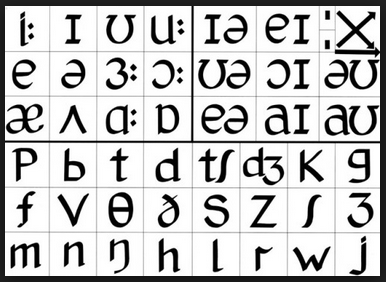 |
| Copyright to Adrian Underhill. This is not an IPA chart. These symbols are meant to be very flexible. 'Phonological' might work but just for RP. Saying this covers all English accents is requires quite a bit of descriptive flexibility. Gimson wouldn't have stood for that kind of slipperiness. |
This blog started as a Grail Diary of sorts about that Chart above. Recently I was given the opportunity of writing for a small readership in Ireland by Peter Lahiff of ELT Ireland's writing group. They are putting together a publication called ELT Ireland Bulletin. Look out for it early next year. In my reading I ran into this wonderful little story by Geoff Lindsey about AC Gimson and Peter Roach and our favourite ELT classroom artifact.
sabato 12 aprile 2014
The Judy Gilbert Hour
This woman is not a drunken grandmother- she is my new pronunciation crush. When I wrote about Adrian Underhill late last week I saw this video on that marvelous little suggestion selection at the end of every YouTube video.
sabato 15 febbraio 2014
"If I had a hammer..."
4 very good teachers are in a rough-and-ready city centre school. They are all going to use the Computer Lab for their Upper-Intermediate/Advanced groups. The advantages are manifold. They know it. They're going to share it in rotation.
This is a pronunciation blog, so...
What could they do with access to every extant website?
My suggestions would be these:
There's loads more of course, but these are my typical recommendations.
This is a pronunciation blog, so...
What could they do with access to every extant website?
My suggestions would be these:
- ask students for their favourite websites for learning English (and make a list)
- ask students for YouTube examples of different accents and dialects from their own languages
- work through a list of good pronunciation resources for learners
- use YouTube for listenings for pronunciation noticing instead of content
- 'timecapsule' their students's English pronunciation by making videos of them now
Regarding Number Three... what are your top favourites?
If I had a group of English language learners who wanted to learn more about pronunciation, I'd show them these to get the whole IPA chart thing out of the way and show them how they could work a bit more autonomously.
- The University of Iowa's Phonetics Interactivity
- An interactive phonemic chart: Underhill's or a more complete one
- English Central's samples with voice analysis
- Alex Bellum's videos on the British Council site
- This color vowel chart interactivity...
 |
| See: http://colorvowelchart.org/index.php/explore-sp-302660307 |
There's loads more of course, but these are my typical recommendations.
The Internet... not so bad after all.
sabato 7 settembre 2013
Broadening their sound spectrum
Teaching pronunciation is teaching listening to speech to hear new sounds and patterns so that we can change the learner's values of perception to enable a better understanding of the voices they hear.
It's a process of helping a learner adjust their values.
It's broadening their sound spectrum just a bit with every lesson so they are more independent and more conscious of the choices they make.
Listening and comparing are the chief activities. Output should be used as a means of communicating a change in the learner's ability to perceive.
Richard Schmidt wrote nicely about consciousness in the language learning process. Here's a link to one his papers I like.
So a lesson can be judged as successful if a learner can distinguish between two versions of a speech signal. It can be judged as having been beneficial because they have developed a new awareness. New awareness is the first step in learning.
And learning is not changing but thinking in a new and more useful way about a task.
So...
Record those learners. And let them listen to recordings. Let them listen to recordings of other students.
Aid the listen process with visuals and interactivities. And by having conversations and encouraging play with how people speak.
It's all still unexplored. Try something this week.
Remember that the goal is not a native like accent but simply clear communication.
It's a process of helping a learner adjust their values.
It's broadening their sound spectrum just a bit with every lesson so they are more independent and more conscious of the choices they make.
Listening and comparing are the chief activities. Output should be used as a means of communicating a change in the learner's ability to perceive.
Richard Schmidt wrote nicely about consciousness in the language learning process. Here's a link to one his papers I like.
So a lesson can be judged as successful if a learner can distinguish between two versions of a speech signal. It can be judged as having been beneficial because they have developed a new awareness. New awareness is the first step in learning.
And learning is not changing but thinking in a new and more useful way about a task.
So...
Record those learners. And let them listen to recordings. Let them listen to recordings of other students.
Aid the listen process with visuals and interactivities. And by having conversations and encouraging play with how people speak.
It's all still unexplored. Try something this week.
Remember that the goal is not a native like accent but simply clear communication.
martedì 6 agosto 2013
MRI Music Video? Scantastic.
Well if you can't use this in an English lesson, then all hope is lost for the world.
Sivu - Better Man Than He. from Adam Powell on Vimeo.
Sivu's video is my new favourite pronunciation video. It uses footage that would have been impossible to collect 25 years ago. MRI and digital video. I'll have to thank Claire Fitzgerald at DCU Language Services for it. It's a great way to start the conversation about how our mouth works.
I'd suggest using it straight away to ask students about the parts of the mouth that move and ask how we make our /l/.
Maybe before showing the video have learners fold a piece of paper in half and draw what they think the mouth looks like from this split-head perspective. Do this before they watch the video and after you've used it, perhaps at the very end of the lesson or for homework, ask them to draw the same view on the other half including more detail.
As a teacher and a learner it's always nice to make the progress obvious and visual and to buck the trend and make the progress non-numeric. No one knows it all about how the mouth works, but this page will be an artifact which proves some progress in learning about how our mouth works to produce speech.
"What a piece of work is man..."
Sivu - Better Man Than He. from Adam Powell on Vimeo.
Sivu's video is my new favourite pronunciation video. It uses footage that would have been impossible to collect 25 years ago. MRI and digital video. I'll have to thank Claire Fitzgerald at DCU Language Services for it. It's a great way to start the conversation about how our mouth works.
I'd suggest using it straight away to ask students about the parts of the mouth that move and ask how we make our /l/.
Maybe before showing the video have learners fold a piece of paper in half and draw what they think the mouth looks like from this split-head perspective. Do this before they watch the video and after you've used it, perhaps at the very end of the lesson or for homework, ask them to draw the same view on the other half including more detail.
As a teacher and a learner it's always nice to make the progress obvious and visual and to buck the trend and make the progress non-numeric. No one knows it all about how the mouth works, but this page will be an artifact which proves some progress in learning about how our mouth works to produce speech.
"What a piece of work is man..."
martedì 28 maggio 2013
We should record our learners' voices, Nokia 3210s and William Carlos Williams
(It's been a while. I don't want to get into it but it suffices to say 'I'm back'. I hope. Let me know if that's not enough)
I still teach English. I still go on about pronunciation being malleable. I think we can consciously affect it in some ways. Recording your learner's voices is one of them.
Richard Schmidt says that before anyone can learn to change anything they have to notice it. This is his noticing hypothesis. This has been applied to grammar teaching which is the majority of ELT from how the research stands: if you search 2009-2013 "noticing hypothesis grammar elt" versus the same years for "noticing hypothesis pronunciation elt" you'll see what I mean. The number of papers pulling these three topics together is 1860 for the grammar group and just over 800 for the pronunciation part.
So I think we can affect what our learners notice by asking them to listen to recordings of themselves. Is this too far out? We may keep written artifacts as evidence of learners written abilities (papers they've written etc.) for planning and assessment. Wouldn't a little Mp3 be just as useful when planning out the week or the month?
TechRepublic had a review of four voice recorder apps this morning. But there's no need to go download yet: if you have a phone more recent than this one you probably have a voice recorder to hand. And your learners have enough money to pay for English lessons... so they probably have a phone which is better than this one too.
So how do we do this? Well ask your students to record themselves reading scripted piece.
Make it something useful, beautiful or at least true because they will listen to it or at least stumble upon it at some point again in the future. In a way this choice of what they should read or repeat is as important as those choices your teachers made when they had you learn things off by heart. Maybe the first paragraph of a book you think everyone should read. Maybe a description of your city. Maybe a poem which doesn't force a reading like The Red Wheelbarrow by William Carlos Williams.
But make it and then make them listen to it with another student or with yourself and make some notes.
Sure you could make a little grammar lesson to tie in with the piece you've chosen and extract the vocabulary for pre-teaching. But my recommendation is to make the subject matter worthy of native speakers and as usual to take the pronunciation as seriously as the spelling. Recording is one of the best ways to include the learner in your process of noticing so that soon it becomes their process too.
I still teach English. I still go on about pronunciation being malleable. I think we can consciously affect it in some ways. Recording your learner's voices is one of them.
Richard Schmidt says that before anyone can learn to change anything they have to notice it. This is his noticing hypothesis. This has been applied to grammar teaching which is the majority of ELT from how the research stands: if you search 2009-2013 "noticing hypothesis grammar elt" versus the same years for "noticing hypothesis pronunciation elt" you'll see what I mean. The number of papers pulling these three topics together is 1860 for the grammar group and just over 800 for the pronunciation part.
So I think we can affect what our learners notice by asking them to listen to recordings of themselves. Is this too far out? We may keep written artifacts as evidence of learners written abilities (papers they've written etc.) for planning and assessment. Wouldn't a little Mp3 be just as useful when planning out the week or the month?
 |
| Nokia 3210: possibly the most popular phone in history. No recorder. |
So how do we do this? Well ask your students to record themselves reading scripted piece.
Make it something useful, beautiful or at least true because they will listen to it or at least stumble upon it at some point again in the future. In a way this choice of what they should read or repeat is as important as those choices your teachers made when they had you learn things off by heart. Maybe the first paragraph of a book you think everyone should read. Maybe a description of your city. Maybe a poem which doesn't force a reading like The Red Wheelbarrow by William Carlos Williams.
But make it and then make them listen to it with another student or with yourself and make some notes.
Sure you could make a little grammar lesson to tie in with the piece you've chosen and extract the vocabulary for pre-teaching. But my recommendation is to make the subject matter worthy of native speakers and as usual to take the pronunciation as seriously as the spelling. Recording is one of the best ways to include the learner in your process of noticing so that soon it becomes their process too.
giovedì 31 gennaio 2013
I use fb enough to call it fb and for you to understand that.
I follow a couple of ELT things- one was BusyTeacher.com
Keeping this blog I am amazed at how little comes up on pronunciation, but I am *special* I guess.
BusyTeacher, run by yet another exhausted but optimistic ex-English language teacher trying to somehow salvage those good, underappreciated years spent teaching, had a "three good websites for..." this week post. So naturally I went to check it out.
My thoughts:
~Merriam-Webster?! you must be joking... it does have some suggestions and models but it doesn't teach or help it refers you to a model. That's like the easiest part of teaching. What kind of...~
~...cool... howjsay. I remember when I found that site. That was a good reference: uncluttered, single focus, obviously made by someone what knew what they were after was a clear student friendly reference-Not world domination.~
~...and what's this three character? Rachel's English? Probably some set of 21 accents videos, if it's anything like the quality of the last two there's nothing new...~
And that's how I left it for 12 hours, after posting it to a couple of folks who might find all three sites worthwhile.
This morning I went back to that link and checked out Rachel's English... and actually it gave me a little fright. It was a very nice if templated design. I watched the intro video. Then as usual went straight to the about section to see who made it and why and of course how.
Here's a link and the text if you don't want to get up:
Well that's nice bu
actually this one is good: http://www.rachelsenglish.com/videos/shape-stressed-syllable It's a new website. We can see that the Rachel'sEnglish American English Pronunciation site has paid BusyTeacher for the article as a kind of infomercial. It presents 3 websites: 2 very old websites which are not user-friendly or authentically different from what a novice teacher can offer their students, and 1 which is better (and shinier!). We saw the same "we'll choose what to compare for you" sales pitch method used by the head of IATEFL last year but sometimes the thing they are selling is honestly pretty good. It does make me wonder what the factors are which help presenters choose this method of presentation.
I follow a couple of ELT things- one was BusyTeacher.com
Keeping this blog I am amazed at how little comes up on pronunciation, but I am *special* I guess.
BusyTeacher, run by yet another exhausted but optimistic ex-English language teacher trying to somehow salvage those good, underappreciated years spent teaching, had a "three good websites for..." this week post. So naturally I went to check it out.
My thoughts:
~Merriam-Webster?! you must be joking... it does have some suggestions and models but it doesn't teach or help it refers you to a model. That's like the easiest part of teaching. What kind of...~
~...cool... howjsay. I remember when I found that site. That was a good reference: uncluttered, single focus, obviously made by someone what knew what they were after was a clear student friendly reference-Not world domination.~
~...and what's this three character? Rachel's English? Probably some set of 21 accents videos, if it's anything like the quality of the last two there's nothing new...~
And that's how I left it for 12 hours, after posting it to a couple of folks who might find all three sites worthwhile.
This morning I went back to that link and checked out Rachel's English... and actually it gave me a little fright. It was a very nice if templated design. I watched the intro video. Then as usual went straight to the about section to see who made it and why and of course how.
Here's a link and the text if you don't want to get up:
Rachel has been working on Rachel's English for over 4 years. Having taught ESL off and on since 1999, she became interested in developing a pronunciation-focused resource while living in Germany under the Rotary Ambassadorial Scholarship program in 2008.
Rachel's initial idea in developing Rachel's English was to make the kind of resource for self-study that she wished she could find for her own foreign language study. As a classical singer, Rachel has spent much time immersed in singing in German, French, Italian, and Spanish. She studied with highly acclaimed vocal teachers and coaches and brings a body of detailed knowledge connected to the voice, placement, and the musical nature of speech to her work as a pronunciation coach.
Rachel lives in New York City. She was born and raised in Florida, went to college in Indiana where she studied Applied Math, Computer Science, and Music, and graduate school for Opera Performance in Boston. She loves being connected to people throughout the world through Rachel's English.
Well that's nice bu
actually this one is good: http://www.rachelsenglish.com/videos/shape-stressed-syllable It's a new website. We can see that the Rachel'sEnglish American English Pronunciation site has paid BusyTeacher for the article as a kind of infomercial. It presents 3 websites: 2 very old websites which are not user-friendly or authentically different from what a novice teacher can offer their students, and 1 which is better (and shinier!). We saw the same "we'll choose what to compare for you" sales pitch method used by the head of IATEFL last year but sometimes the thing they are selling is honestly pretty good. It does make me wonder what the factors are which help presenters choose this method of presentation.
giovedì 1 novembre 2012
venerdì 28 settembre 2012
Keywords English
This is my product review of Keywords English. Below you will find a review of the freeware version available today 28.9.12 on the iPad. Keywords English is an app for iDevices aimed at the Chinese-speaking learners of English and science.

REVIEW
Keywords English shows how a vocabulary pre-teaching stage of an English language lesson can be turned into an app.
This particular lesson is on describing photosynthesis. Using this for the first time this morning felt very much like observing a trainee teacher on the CELT course here in Dublin: there is much admirable care taken but you want them to allow the learner to lead a bit more.
The app has three sections: Introduction, Vocabulary and Pronunciation
Section 1: Introduction
The Introduction has two pages. One is a simple welcome and statement of the apps objectives for the learner. The second page presents a dense text explaining the process of photosynthesis. The grammar in the text is easily understandable by typical intermediates in Dublin or- according to this according to CEFR descriptors here- possibly A2+. The problem is not the grammar, but the vocabulary. This text is for school students or people in the initial stages of transferring their professional expertise to English to open themselves to worldwide opportunity. Much science is now taught through English internationally. This makes sense because any career in science involves collaboration internationally.
So there is surely a place for this sort of application. Is this the best way to approach it for your students? Let's look.
Section 2: Vocabulary
There are 24 pages. This is the heart of the app. 12 words are examined in the general context of describing photosynthesis. The words all feature in the introduction text.
You might hear any half-drunken spring roll eater identifying this as pronunciation problem. But who provides the solution? It would take a knowledgeable English teacher, speech therapist or a phonologist to note the underlying tongue placement problem and work on perception and awareness. Tough work.
REVIEW
Keywords English shows how a vocabulary pre-teaching stage of an English language lesson can be turned into an app.
This particular lesson is on describing photosynthesis. Using this for the first time this morning felt very much like observing a trainee teacher on the CELT course here in Dublin: there is much admirable care taken but you want them to allow the learner to lead a bit more.
The app has three sections: Introduction, Vocabulary and Pronunciation
Section 1: Introduction
The Introduction has two pages. One is a simple welcome and statement of the apps objectives for the learner. The second page presents a dense text explaining the process of photosynthesis. The grammar in the text is easily understandable by typical intermediates in Dublin or- according to this according to CEFR descriptors here- possibly A2+. The problem is not the grammar, but the vocabulary. This text is for school students or people in the initial stages of transferring their professional expertise to English to open themselves to worldwide opportunity. Much science is now taught through English internationally. This makes sense because any career in science involves collaboration internationally.
So there is surely a place for this sort of application. Is this the best way to approach it for your students? Let's look.
Section 2: Vocabulary
There are 24 pages. This is the heart of the app. 12 words are examined in the general context of describing photosynthesis. The words all feature in the introduction text.
- chemical
- process
- cells
- glucose
- chloroplast
- pigment
- chlorophyll
- atmosphere
- respiration
- trap
- contain
- absorb
Like the initial stage of a traditional PPP "Present, Practice, Produce" English Language Teaching lesson, each word is presented for that particular context. Each word is a piece of data about the about the topic or context, each word also carries a lot of metadata. Learners need that metadata to use the new words or phrases productively or receptively. But every word and fact we know is stored away with lots of metadata, the knowledge about the information.
What metadata items does Keywords English find significant enough to detail? Here we go:
- Part of speech (abbreviated text)- assuming learners know (v) stands for verb and all that entails...
- Phonemic transcription (text: "RP IPA") -assuming learners know the values and conventions...
- Mandarin translation (text)
- Automatic English recording of the word in citation form (audio)- this is not computer-generated and I like the voice as it's not specifically American/British/Australian. As soon as you see the page opens, the app triggers this followed by its...
- Automatic Mandarin recording of the word read aloud in citation form (audio) - Not using a text-to-speech application is a good choice. Growing this app to cover a course will mean this gets sacrificed but this is a choice for quality.
- A graphic- These are notoriously difficult to get right- i.e. Can one picture suit the context for every user? These are ok but not terribly attractive. Some are stock photos and some seem to be original drawings so the theme is 'eclectic' at best when visualization is the arguably strongest asset of the iDevice range for the language learner.
- A dictionary-like definition phrase (text)- Again, really hard to get right for everyone. This is why concept checking questions, intelligent learner-focussed teachers will always be needed in schools and training will always need to be teamed up with experience to activate knowledge.
- A recording of the English definition phrase (audio)
- A mandarin translation of the definition phrase (text)
- A recording of the Mandarin translation definition phrase (audio)
- An example sentence containing the word in use- The examples keep the word in the same context, but provide a different example sentence. This is often how teachers get learners to triangulate a meaning. At least they get them to the point where the learner believes they've learned the concept. The teacher provides many examples and definitions and in some cases translations to help learners construct their own concept of what the word-item represents. Sometimes they help them choose a specific and direct translation.
- A recording of the English example sentence (audio)
- A mandarin translation of the example sentence (text)
- A recording of the Mandarin translation example sentence (audio)
You would think that would be enough for the learner to "get it"- to relieve the teacher or designer of their share of the responsibility in the learning process. But they'll never know if it was, unless there's feedback and a set of studies and even then...
But will it attract money to the maker? Will it be a template for a big (evil) publisher? Is there an original piece of technology or a new approach here? Well maybe in the third section.
Section 3: Pronunciation
This section has two elements: 1) feature drawing attention to the learner's own assessment of where the syllable stress lies in the 12 words and 2) a simple voice recorder and playback application. A Voice Mirror, if you like my term.
This is a simple step forward.
Some English Language Teachers choose to focus on the sounds as previously detailed in this blog. This is a mistake. But it feels right because sounds stick out as obviously different- but only because we can show that difference in writing.
Consider this: you are in Chinese takeaway and the girl at the counter is being discussed by two trainee English language teachers just outside the door. You overhear two comments they make.
Example1
"Her R's sound like L's"-
Example 2
"She was like spring roll- as opposed to what? like- spring rock?"
Usually the anyone would identify this as something odd, but nobody is going to say "Her syllable stress is off." It would take some insight or training to say "She doesn't know that we stress the first word in compound nouns like traffic light, dinner jacket and spring roll" A teacher would need to read a couple well-selected book pages or participate in workshop to prioritise syllable stress over sound differences because we as native speakers just don't have the vocabulary or the cognitive tools to talk about it.
Once we get there as teachers it takes relatively little work to identify syllable stress as a learning issue (and memory aid because we recognise words in speech primarily through syllable stress!). We can help our learners tremendously by steadily raising awareness of syllable stress. Little more than asking where the stress is does the trick. It actually is the right question. Our job as teachers is to raise awareness of these issues in lessons so that they are more capable of observing them outside of lesson hours. Keywords English finds a way to present the learner with the question thereby raising awareness.
The Voice Mirror
Each word's pronunciation page quizzes you about which syllable is stressed and shows you where the breaks in the word should be if words were helpfully divided by syllables. There's the button which allows you to listen as many times as you want. But it also encourages you to try it yourself and self-assess. It does this by providing a very quick and clean record-and-play feature: a "voice mirror" as I like to call it. I think all classrooms, English learning apps and teachers and learners should have one. It should be loud though. The iPad is ideal for this I found this morning. This is a basic and it maintains what I think is a new standard feature for interactive language learning applications on and from the web. Voice Mirrors need not process your speech. They just record it and play it back: the faster and easier, the better. This one does it fine and fast on the iPad.
Assessment
Keywords English is a nice addition to your school's app collection if you have iDevices. What was reviewed here was simply the introductory section available free today here. If the goal is to help learners prepare to make an oral presentation about photosynthesis it would be a help. This should be better explained in the Introduction. The Vocabulary will need more explanations and examples available if it is to stand in for the teacher-learner situation. The Pronunciation section could be improved but it is a huge advance over entry-level teachers/helpful native speakers.
I think *any* pronunciation application is a positive contribution to the language learning community. This certainly doesn't replace the teacher.
As a teacher, I would use this as designed as part of a CLIL approach to this particular topic if students were going to present or write on it.
As a general EFL teacher I would use and recommend it for its syllable stress awareness raising and that really simple Voice Mirror.
So is there anything novel here? No, not to an experienced teacher. But it is an interesting reflection on the gap between entry-level teaching techniques and automated best practice.
A great start. I hope this grows some legs and runs.
Download again is available here: http://itunes.apple.com/ie/app/keywords-english/id558204098?mt=8
sabato 22 settembre 2012
Adrian Underhill Hour
I've recently started training teachers at Swan Training Instititute. Gillian who heads the programme is a fan of Adrian Underhill. Me too. His Sound Foundations book is one of the two best books about pronunciation teaching for English Language Teachers*. His approach is inductive and raises awareness of how the mouth works. Those are key.
He's helped me develop an appreciation for helping learners to grow their awareness. It's only after this step that they can affect their intelligibility. He is great at making the steps small for the learner while making the learner's abilities physically obvious. This makes for a memorable experience of discovering how we make sounds. Making memorable sounds and sounds memorable is what he does.
Yes there are some things I would change- memorable bits have to be recalled and reassembled before they can be part of output in any word or phrase- so a symbols lesson may not do more than impress. But it still raises awareness. Symbol learning lessons work well as trust building lessons. This may be the reason to do pronunciation lessons on day one. It also makes for great workshop material- but Adrian made it into that. Previously it was a field of enquiry. I'm a bit ambiguous about this being a positive development.
Reverence for the Chart and the idea that this set of symbols works successfully for all native speakers: it simply doesn't hold water and that's why I and so many teachers must reject it as a descriptive and prescriptive tool. The Chart: it's simply a not true description or prescription of the contents of our language in a phonological or phonetic sense. It may be "useful lie" for some students and teachers who need to feel that they can "learn a language in just 60 minutes."
Also teaching this chart inevitably causes chuckles as you have to speak like someone who has more gold in their house than you do while pretending they speak better than you do. We all feel silly pretending things about the queen. And we should.
So I like him and what he's done but think he's a snake-oil salesman and the chart is bunk. Yep.
DH Lawrence said, "Do I contradict myself? Very well, I contradict myself. I contain legions." But this is just a pronunciation blog.
But then again we all do contain legions... Legions of capabilities, registers, joke accents, our interview voice, levels of formality, we whisper and we shout and mock and feign interest. Perhaps there is no one hour lesson which can do more than raise awareness of how complex things can be in pronunciation. Teaching is reductionist- Does that make it bunk?
I really enjoyed this lesson and there is always more to learn about teaching and learning especially from Mr Underhill. I think he knows that a master teacher teaches the student what they need to know and he, like all of us, has taught what he didn't know when he was a new teacher and and only what he did know later on. The third step of teaching- when you teach what your students need- is a higher plane. I'm curious to know if you think this is him at his most learner focussed or his most content focussed. The balance is everything here.
Knowing this chart is like knowing your history, you have to know it to move beyond it meaningfully- without brashly throwing phonology and phonetics away as bunk. Phonology and phonetics provide many solutions to problems from L1 transfer. Phonology and Phonetics are not his exclusive domain nor are they encapsulated in the Chart anymore than they are in the English File books. Phonology and Phonetics are the investigators'. If you are an investigator into how to help your learners, you will doubtless have wrestled with phonology and phonetics or you will need to. And you may have found Adrian's Chart equally useful and frustrating. And bravo if you have.
It's a fascinating time to be teaching because we can change it all by raising questions and making resources and doing writing up our research and importantly criticising each others' work constructively. We will figure it all out and that may mean moving beyond the idols of old. We need to teach this stuff differently.
*The other is How to Teach Pronunciation by Gerard Kelly. Highly recommended by myself and Paul Robinson wherever he is.
venerdì 10 agosto 2012
Noticing: What /r/ you looking at?
Noticing that there are differences is harder than it looks. I've come around to thinking that listening for sound itself- something besides the meaning- is the key in the learner's development of confidence in their speech.
There is a "top down" approach to teaching sounds and it just seems like painting a car on canvas and trying to drive it to work. This when a teacher or a learner has determined that a native accent is a composite of a series of sounds. These might be those famous 44 sounds of Received Pronunciation or the variants and varieties that have been analyzed well enough to be lumped together and given symbols from the International Phonetic Alphabet. But how does an accent or dialect group coalesce? I think it's just by listening and respecting the other person as a good place to be aurally.
The differences in sounds are the results of the physical posture, of your voice organs and breath. Your vocal settings. Old B. Honnikman suggested that back in 1964 and most people who have looked into it, like you, might have had the same inkling. This link will fill in the back story a bit.
But how do we come to set those settings? What do we use to measure? We learned our accents as kids. We didn't have measurements then. When we are this far from understanding and so involved in wanting to be bigger and develop we need and use something- we have comparison, only comparison. "This sounds like that, more than that other one."
A great experiment in class is to ask your students to talk like an American trying to speak their language. You'll be surprised how good and recognizable they are. And it's funny. And fun. But it's key for building a mutual understanding: they hear some features of the "native" voice.
But what else can you draw from the experience? They recognize it as too far out. Features are too far out. It's laughably nasal. But listen for their "trouble sounds": what happens to them? If they stay maybe they really haven't noticed the differences. Maybe they are oblivious to the sound. Maybe they haven't noticed them.
Let's look at comparison. How can we aid the learner in comparing his /r/ sound and a native /r/ sound or a target /r/ sound. I have a Korean student who struggles with the /l/ and /r/ difference. I have another one who hasn't noticed the difference. Compare the two learners.
Let's say the Struggler and the Oblivious are in the same level. They get a teacher who feels that pronunciation work is useless. The Oblivious one goes on until she finds a teacher who helps her notice, or a moment where she has an epiphany. The Struggler with the same teacher gets frustrated with teachers and starts investigating on her own but finds less value in the teacher/learner experience. I think this is where a lot of students find themselves. I think a Learner (yes, a big-L) will look for these differences but won't know they are there unless they get the epiphany moments or abandon their old voice. This won't happen if they've been studying for years. It'll take a book to convince them that it's possible to change, that there is a way and that it's worth changing.
I'd much rather have the Struggler in class but most of the time I have the Oblivious. With the Struggler two thirds of the work is done. "Though learners may be able to recognize individual sounds, or phonemes, belonging to language, they have much more trouble assessing their problems (Dlaska & Krekeler, 2008) and prescribing ready solutions. " But we can work with both of them if we have an understanding of how the mouth works and can work to make the different sounds. Here's my little help.
There is a "top down" approach to teaching sounds and it just seems like painting a car on canvas and trying to drive it to work. This when a teacher or a learner has determined that a native accent is a composite of a series of sounds. These might be those famous 44 sounds of Received Pronunciation or the variants and varieties that have been analyzed well enough to be lumped together and given symbols from the International Phonetic Alphabet. But how does an accent or dialect group coalesce? I think it's just by listening and respecting the other person as a good place to be aurally.
The differences in sounds are the results of the physical posture, of your voice organs and breath. Your vocal settings. Old B. Honnikman suggested that back in 1964 and most people who have looked into it, like you, might have had the same inkling. This link will fill in the back story a bit.
But how do we come to set those settings? What do we use to measure? We learned our accents as kids. We didn't have measurements then. When we are this far from understanding and so involved in wanting to be bigger and develop we need and use something- we have comparison, only comparison. "This sounds like that, more than that other one."
A great experiment in class is to ask your students to talk like an American trying to speak their language. You'll be surprised how good and recognizable they are. And it's funny. And fun. But it's key for building a mutual understanding: they hear some features of the "native" voice.
But what else can you draw from the experience? They recognize it as too far out. Features are too far out. It's laughably nasal. But listen for their "trouble sounds": what happens to them? If they stay maybe they really haven't noticed the differences. Maybe they are oblivious to the sound. Maybe they haven't noticed them.
Let's look at comparison. How can we aid the learner in comparing his /r/ sound and a native /r/ sound or a target /r/ sound. I have a Korean student who struggles with the /l/ and /r/ difference. I have another one who hasn't noticed the difference. Compare the two learners.
Let's say the Struggler and the Oblivious are in the same level. They get a teacher who feels that pronunciation work is useless. The Oblivious one goes on until she finds a teacher who helps her notice, or a moment where she has an epiphany. The Struggler with the same teacher gets frustrated with teachers and starts investigating on her own but finds less value in the teacher/learner experience. I think this is where a lot of students find themselves. I think a Learner (yes, a big-L) will look for these differences but won't know they are there unless they get the epiphany moments or abandon their old voice. This won't happen if they've been studying for years. It'll take a book to convince them that it's possible to change, that there is a way and that it's worth changing.
I'd much rather have the Struggler in class but most of the time I have the Oblivious. With the Struggler two thirds of the work is done. "Though learners may be able to recognize individual sounds, or phonemes, belonging to language, they have much more trouble assessing their problems (Dlaska & Krekeler, 2008) and prescribing ready solutions. " But we can work with both of them if we have an understanding of how the mouth works and can work to make the different sounds. Here's my little help.
 |
| All rights reserved i.e. if this shows up in OUP or CUP I will come after you. Love to my brave volunteers. Especially Shane and Saemi whose accent is not that bad. Respect to John Levis and the team at U.Iowa. |
domenica 29 gennaio 2012
The Pronunciation Survey
I've set up a learners survey on pronunciation attitudes based on one that I read preparing for my thesis. It's 10 multiple choice questions via SurveyMonkey. It's really just for Intermediates and above.
Click here to take survey
I will publish the results when I get 50 surveys in. I'll even try a little analysis just to make it interesting.
I'd like to learn about as many learners as possible, so I'll share this with teachers here in Dublin and online.
(IF you are interested, I only wrote one of the questions. Nine of the questions are adapted from A. Raymond Elliott's Pronunciation Attitude Inventory appended in his Foreign Language Phonology: Field Independence, Attitude, and the Success of Formal Instruction in Spanish Pronunciation. This was published in The Modern Language Journal, Vol. 79, No. 4 (Winter, 1995), pp. 530-542. Even the photo above is adapted and shared from a photo I saw as a kid. My research will be original though. Promise. By the way here's the full text via GoogleScholar.)
The link to my adapted survey is below if you would like to share it. Thanks.
http://www.surveymonkey.com/s/HB22RCN
So- yes that's right! Hard evidence about how our students think about studying pronunciation will be here in just a bit. Technically nothing's hard evidence until we get to 300 learners though.
I'll keep adding and publishing the data, if you keep asking the students. Thanks again.
*****
The results are coming in... thank you for telling your friends. Just a few more to go.
Click here to take survey
 |
| I wanna walk like you, talk like you, you hoo hoo. |
I will publish the results when I get 50 surveys in. I'll even try a little analysis just to make it interesting.
I'd like to learn about as many learners as possible, so I'll share this with teachers here in Dublin and online.
(IF you are interested, I only wrote one of the questions. Nine of the questions are adapted from A. Raymond Elliott's Pronunciation Attitude Inventory appended in his Foreign Language Phonology: Field Independence, Attitude, and the Success of Formal Instruction in Spanish Pronunciation. This was published in The Modern Language Journal, Vol. 79, No. 4 (Winter, 1995), pp. 530-542. Even the photo above is adapted and shared from a photo I saw as a kid. My research will be original though. Promise. By the way here's the full text via GoogleScholar.)
The link to my adapted survey is below if you would like to share it. Thanks.
http://www.surveymonkey.com/s/HB22RCN
So- yes that's right! Hard evidence about how our students think about studying pronunciation will be here in just a bit. Technically nothing's hard evidence until we get to 300 learners though.
I'll keep adding and publishing the data, if you keep asking the students. Thanks again.
*****
The results are coming in... thank you for telling your friends. Just a few more to go.
domenica 6 novembre 2011
Good Wikipedia: Japanese learners finally differentiating R and L
I am a big fan of John Wells' blog. He does know I exist unfortunately. My old email started spamming the world after I joined LinkedIn. Yes, I'm making excuses.
So anyway he frequently mentions Wikipedia as a source. This may be because he is more a descriptive phonologist than a prescriptive one. A smart choice and one which takes quite a bit more brains to pull off and is generally better for the world. The last thing we need is another British accent dictator.
Anyway while looking to see what they mention there as "general knowledge" on one topic the article on Japanese Learners of English popped up. It's great: well-researched and better referenced than the stuff I've written on the topic. Give it a read if you have a Japanese student. Send a note if you want a good resource for teaching it.
Here's the article: http://en.wikipedia.org/wiki/Japanese_speakers_learning_r_and_l
So anyway he frequently mentions Wikipedia as a source. This may be because he is more a descriptive phonologist than a prescriptive one. A smart choice and one which takes quite a bit more brains to pull off and is generally better for the world. The last thing we need is another British accent dictator.
Anyway while looking to see what they mention there as "general knowledge" on one topic the article on Japanese Learners of English popped up. It's great: well-researched and better referenced than the stuff I've written on the topic. Give it a read if you have a Japanese student. Send a note if you want a good resource for teaching it.
Here's the article: http://en.wikipedia.org/wiki/Japanese_speakers_learning_r_and_l
mercoledì 2 novembre 2011
If the Daily Mail has figured it out I think we all have.
This article is based on an interview with Mario Saraceni. Here are the first couple of lines:
People learning the English language around the world should not adopt the 'Queen's English', a linguist said today.
Dr Mario Saraceni, of the University of Portsmouth, called on native English speakers to 'give up their claim to be the guardians of the purest form of the language'.
He argued that the ways it has been used and changed by millions of people around the world are equally valid.
martedì 18 ottobre 2011
Teaching by video.
I was really impressed by this video.
She demonstrates great understanding and control and that grounds her lesson. It's specific and very fast but because it's directed at a targeted group of students, Koreans who have trouble with /f/, it works. Also the learner leads because they pause and repeat bits at will, instead of pretending that the teacher is omniscient.
This is another great reason for teachers to run class blogs. Good learners really do find the good resources and if you can start them started you start a virtuous circle for your school and its future learners.
I've been thinking this a lot recently: books are not the best pronunciation resources. Multimedia is the only way to teach this stuff. Build a set of resources you can share with your learners.
Good luck.
She demonstrates great understanding and control and that grounds her lesson. It's specific and very fast but because it's directed at a targeted group of students, Koreans who have trouble with /f/, it works. Also the learner leads because they pause and repeat bits at will, instead of pretending that the teacher is omniscient.
This is another great reason for teachers to run class blogs. Good learners really do find the good resources and if you can start them started you start a virtuous circle for your school and its future learners.
I've been thinking this a lot recently: books are not the best pronunciation resources. Multimedia is the only way to teach this stuff. Build a set of resources you can share with your learners.
Good luck.
domenica 16 ottobre 2011
To teach the IPA Phonology or NOT
It's the old debate: Is teaching the IPA chart worthwhile in English Language teaching?
I think everyone teaching nowadays should have a good handle on what is in the use of the IPA for a student who wants to really participate in spoken English.
So many teachers don't want their students to be their peers. They simply don't believe in their students or their own abilities.
In the end a teacher can keep their students "in their place" with incomplete pronunciation work. It's just not fair to tell show them everything but how to use their mouths to communicate. It's not communicative.
That's my opinion, of course. Where do you stand?
domenica 25 settembre 2011
SNACK Sound Toolkit
http://www.speech.kth.se/snack/
This is another whopper like PRAAT. This one was developed at the Royal Institute of Technology (KTH) in Stockholm.
So SIT then.
It's cool and cheap and does the job. This is like the IKEA of speech tools. Maybe too high-level though. Let's see:
This is another whopper like PRAAT. This one was developed at the Royal Institute of Technology (KTH) in Stockholm.
So SIT then.
It's cool and cheap and does the job. This is like the IKEA of speech tools. Maybe too high-level though. Let's see:
The Snack Sound Toolkit is designed to be used with a scripting language such as Tcl/Tk or Python. Using Snack you can create powerful multi-platform audio applications with just a few lines of code. Snack has commands for basic sound handling, such as playback, recording, file and socket I/O. Snack also provides primitives for sound visualization, e.g. waveforms and spectrograms. It was developed mainly to handle digital recordings of speech, but is just as useful for general audio. Snack has also successfully been applied to other one-dimensional signals.Yep. Bit beyond me. But this is the new goal: technology-literate teachers who also work outside of universities.
The combination of Snack and a scripting language makes it possible to create sound tools and applications with a minimum of effort. This is due to the rapid development nature of scripting languages. As a bonus you get an application that is cross-platform from start. It is also easy to integrate Snack based applications with existing sound analysis software.
ELSTA as a start to a PLN
If you teach a language in Dublin and work with a school you should know about these guys or should I say girls.
They are the English Language Support Teachers Association here in Ireland. Their membership appears to include teachers of Spanish and German here in Ireland as well as English Language Support and the occasional EFL teacher (me) and UCC's Séamas Kirkpatrick. There seem to be a lot of links to TCD amongst the Exec group.
I suppose the main reasons to join groups like this are to find out where you live and to find good resources. But the best resources are always going to be people. Despite my love for multimedia, hanging out with sharp people is one of life's great pleasures.
They'll be having another conference in Dublin on the 15th of October. If you come along and read their site first you'll be finding a whole lot of other people who are into what you do. And iron sharpens iron. This is what my grandmother said years ago. Personal Learning Networks is the more recent buzz word for it.
These don't just have to be physical. Twitter really can work for a for you in finding resources and materials and advice from working teachers like ourselves and the people who write our materials. Loads of authors use it to stay in contact and keep sharp. If you aren't using it try it for a month following the people on the list in this site on PLNs.
I think you'll be glad you did.
Iscriviti a:
Post (Atom)